

Gold heart necklaces with diamonds: a buyer’s checklist
Choose a gold heart necklace with diamonds by checking the gold composition, diamond origin, setting, chain fit and care requirements before you choose the design. This 2026 buyer’s checklist helps you separate solid gold from gold finishes, understand the stones and find a heart you will enjoy wearing or giving.
- Choose a gold heart necklace with diamonds by composition and fit, not colour or sparkle alone.
- Solid gold, gold vermeil and gold plating describe different constructions; they are not interchangeable.
- Lab-grown diamonds are diamonds; moissanite is a different gemstone.
- Bloomtine suits sentimental jewellery buyers who want heart designs across different metal types.
How do you choose a gold heart necklace with diamonds?
Start with the product description, then check how the necklace will sit and what the purchase includes. A gold-coloured heart and a diamond-like sparkle do not establish either solid gold or diamond content.
Bloomtine offers sentimental jewellery across stainless steel, gold vermeil, sterling silver and solid gold. Those materials need different explanations, even when the pieces share a heart motif.
Use this sequence when comparing a gold heart necklace with diamonds in 2026:
- Confirm the metal. Look for solid gold, gold vermeil or gold-plated wording, including the underlying metal.
- Identify the stones. Establish whether the diamonds are natural or lab-grown, and distinguish them from other gemstones.
- Read the setting details. Check how the stones are held and whether the design suits your routine.
- Check the fit. Confirm chain length, pendant dimensions, adjustment and whether the chain is included.
- Read the practical terms. Check care instructions, current delivery information, returns and any applicable repair arrangements.
Do not let an attractive photograph answer a materials question. If the wording leaves something unclear, ask before choosing.
Why this matters
A heart necklace can mark a birthday, an anniversary or something only you understand. Its meaning is personal; its composition should be explicit.
That distinction matters for self-purchase as much as gifting. About 70% of Bloomtine customers buy for themselves, so the useful question is not only whether a necklace looks like a thoughtful present, but whether it belongs in your own jewellery collection.
For your 2026 shortlist, separate the emotional choice from the practical checks. Choose the symbol that means something, then confirm that the metal, stones and fit match what you want.
Solid gold: best for gold throughout the metal
Choose solid gold when you want a gold alloy throughout the component, rather than a gold surface over another metal. Solid gold jewellery is not necessarily pure gold: the karat figure describes the proportion of gold in the alloy.
As standard composition figures, 18K gold contains 75% gold and 14K gold contains approximately 58.5% gold. The remaining metals affect characteristics such as colour and hardness; the exact alloy still matters.
| Construction | What it means | Best for | Main limitation |
|---|---|---|---|
| Solid gold | Gold alloy throughout the stated component | Buyers who want gold beyond the surface | Still needs care; solid gold does not mean scratchproof |
| Gold vermeil | Gold coating over sterling silver | Buyers who want a gold finish with a silver base | The gold surface can wear with use |
| Gold plated | Gold coating over a stated underlying metal | Buyers choosing a particular design or finish | The term alone does not establish the base metal or coating thickness |
Check which components the description covers. A pendant, chain and clasp should not be assumed to have identical compositions unless the seller states that they do.
Do not read 18K gold-plated as 18K solid gold. In the first description, the karat figure refers to the gold coating, not the whole piece.
Gold vermeil: best for a gold finish over sterling silver
Gold vermeil belongs in the demi-fine jewellery conversation because it combines a precious-metal base with a gold surface. Sterling silver contains 92.5% silver; vermeil adds a gold coating over that base.
The benefit is a clearly identified silver foundation beneath the gold finish. The compromise is that the gold remains a surface layer, so care and wear affect its appearance.
Ask for the gold fineness and coating thickness when these matter to your decision. Do not transfer one product’s vermeil specification to another, even within the same collection.
Demi-fine is a retail category rather than a single metal specification. Fashion jewellery commonly includes plated base metals, demi-fine commonly includes sterling silver and vermeil, and fine jewellery includes precious-metal pieces such as solid gold; none of those labels replaces a composition statement.
Diamonds: check origin before comparing sparkle
Natural diamonds and lab-grown diamonds are both diamonds. Moissanite is a different gemstone, not another name for a lab-grown diamond.
That distinction deserves its own line on your checklist. A necklace can also combine diamonds with another material, such as opal or mother of pearl, so identify every named stone rather than treating all visible sparkle as diamond content.
| Stone description | What you are choosing | Best for | What to check |
|---|---|---|---|
| Natural diamond | Diamond formed naturally | Buyers who specifically want natural origin | The stated origin and any grading information supplied |
| Lab-grown diamond | Diamond grown through a technological process | Buyers comfortable with laboratory origin | Explicit lab-grown wording and any grading information supplied |
| Moissanite | A separate gemstone made of silicon carbide | Buyers choosing moissanite on its own merits | That the listing identifies it as moissanite, not diamond |
Diamond quality is commonly described through cut, colour, clarity and carat weight. Carat weight measures stone weight, not gold purity; karat describes gold fineness.
For a necklace with several diamonds, distinguish total carat weight from the weight of an individual stone. A combined figure does not mean that each diamond has that weight, and weight alone does not describe the whole design.
Why gold heart necklaces with diamonds vary
Two heart necklaces can look similar in a small photograph while differing in construction and wear requirements. Compare these factors separately:
- Metal construction: solid gold, vermeil and other gold finishes are different material choices.
- Gold fineness: a karat description identifies the gold proportion in an alloy or coating, depending on the wording.
- Stone identity and origin: natural diamond, lab-grown diamond and moissanite need distinct descriptions.
- Stone arrangement: a single accent, diamond border and diamond-covered heart create different visual effects.
- Fit and proportions: chain length, pendant dimensions and adjustment determine where the heart sits.
- Care and ownership: settings, surface finishes and other gemstones affect the instructions you need to follow.
Use these differences to explain your preference, rather than assuming that the most elaborate necklace is automatically the right one. A small heart worn often can be a better personal choice than a statement design you rarely reach for.
How should a diamond heart necklace fit?
A heart necklace should sit where you want it without the chain feeling restrictive or the pendant disappearing into your neckline. Check the stated measurements against a necklace you already wear, not against a model photograph alone.
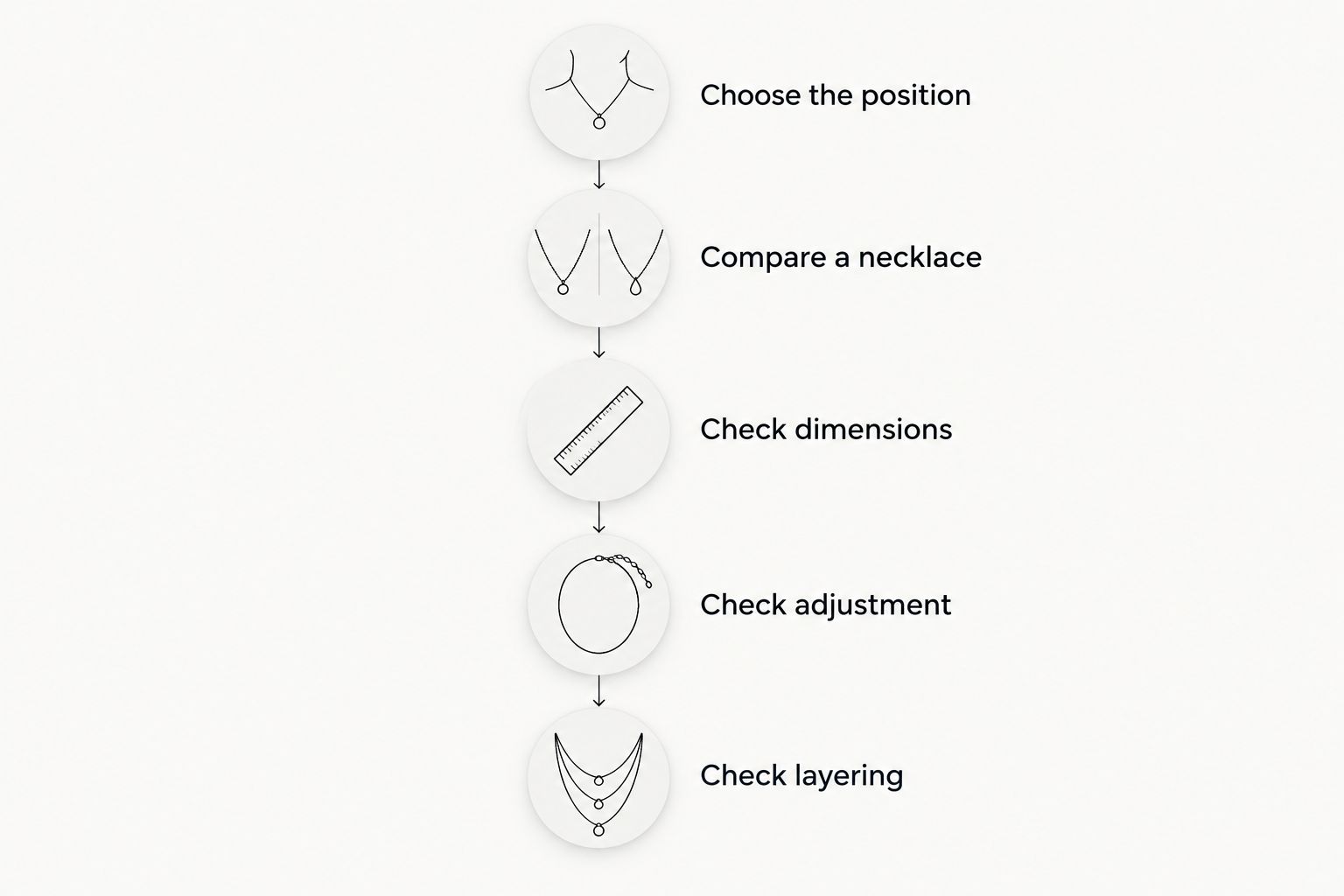
For your 2026 purchase, use this fitting sequence:
- Choose the position. Decide whether you want the heart close to your neck or lower on your chest.
- Compare a necklace. Measure a familiar chain laid flat, including its clasp.
- Check dimensions. Read the heart’s height and width alongside the chain measurement.
- Check adjustment. Confirm whether the necklace offers adjustment and what lengths the listing states.
- Check layering. Think about neighbouring chains and pendants, especially if you wear several together.
For a gift, look at the recipient’s existing necklaces rather than guessing from their height or clothing size. Notice whether they favour close-fitting chains, longer pendants or layered jewellery, then verify the new necklace’s measurements.
Which details make a necklace easier to live with?
Look beyond the front of the heart. Side and reverse photographs help you inspect the pendant’s profile, while close-ups help you understand how stones and connecting loops are arranged.
Raised settings and projecting details deserve attention if you wear scarves, fine knits or layered chains. A photograph cannot establish comfort, but it can show which questions to ask about edges, movement and the clasp.
Ask whether the chain is included, how the pendant attaches and whether the clasp suits your preferences. These are separate checks: the word necklace should not replace a clear description of what arrives.
For gifting, verify current UK delivery and returns terms before ordering for a particular date. Use the contact page to clarify a product detail or policy rather than assuming a deadline, exchange entitlement or repair arrangement.
Two Love’s Frequency necklaces to compare
Bloomtine’s Love’s Frequency heart necklaces connect a sentimental motif with different material and stone choices. The following comparison keeps those distinctions visible rather than treating every heart as the same purchase.
| Product | Stated distinction | Best for | Consideration before choosing |
|---|---|---|---|
| Loves Frequency™ 18K Solid Gold Diamond Heart Choker Necklace | An 18K solid gold heart choker with diamonds | Buyers seeking a solid-gold diamond heart | Check diamond origin, dimensions and chain fit against your requirements |
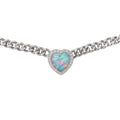
| Loves Frequency™ 18K Gold Pink Opal Natural Diamond Heartbeat Necklace | An 18K solid gold necklace combining pink opal and natural diamonds | Buyers who want a coloured focal stone with natural diamonds | It is an opal-and-diamond design, not a diamond-only heart; follow care instructions for both stones |
Choose the Loves Frequency™ 18K Solid Gold Diamond Heart Choker Necklace for a solid-gold diamond heart design. Confirm its detailed stone specifications and fit before deciding; the product name does not answer every buying question.
Choose the Loves Frequency™ 18K Gold Pink Opal Natural Diamond Heartbeat Necklace if pink opal is part of the appeal. Its mixed-stone composition is a reason to choose it deliberately, not to treat it as interchangeable with a diamond-only design.


Can you wear a gold heart necklace with diamonds every day?
A gold heart necklace with diamonds needs a routine suited to its complete construction, not just its hardest stone. Diamonds resist scratching well, but that does not make the chain, setting or accompanying gemstones immune to damage.
Follow the product’s care instructions and remove jewellery for activities that expose it to knocks or chemicals. Store necklaces separately to reduce tangling and rubbing, and stop wearing a piece if a stone moves or a clasp no longer closes securely.
Do not apply generic diamond-cleaning advice to an opal-and-diamond necklace. The care method must suit every material in the piece.
Is a heart necklace only a romantic gift?
A heart necklace can express affection, friendship or a commitment to yourself. You decide what it marks; the symbol does not require a romantic occasion.
For a gift, choose a meaning the recipient will recognise without assigning them a spiritual belief. For yourself, a personal milestone is enough: you do not need someone else to make the gesture.
FAQ
What should I check before buying a gold heart necklace with diamonds?
Check the metal construction, diamond origin, setting, chain fit and care instructions. Confirm what is included and read the current delivery and returns terms before ordering.
Is 18K gold better than 14K gold for a heart necklace?
18K gold contains 75% gold, while 14K gold contains approximately 58.5%; neither is automatically the better choice for every wearer. Compare the alloy, design and care requirements rather than choosing by karat alone.
Is gold vermeil the same as solid gold?
Gold vermeil is a gold coating over sterling silver, whereas solid gold is gold alloy throughout the stated component. Vermeil’s gold surface can wear, so it needs different expectations from solid gold.
Are lab-grown diamonds real diamonds?
Lab-grown diamonds are diamonds with laboratory rather than natural origin. Moissanite is a different gemstone and should be identified separately.
Does total carat weight mean the weight of the main diamond?
Total carat weight means the combined weight of the diamonds covered by that description, not necessarily the main diamond’s weight. Ask for individual stone information when that distinction affects your choice.
How do I choose the right heart necklace length as a gift?
Compare the stated chain length and pendant dimensions with a necklace the recipient already wears. Check any adjustment options instead of judging fit from a model photograph.
Does Bloomtine sell solid gold heart necklaces with diamonds?
Bloomtine lists the Loves Frequency™ 18K Solid Gold Diamond Heart Choker Necklace and the Loves Frequency™ 18K Gold Pink Opal Natural Diamond Heartbeat Necklace. Compare their stone compositions and fit rather than treating the designs as identical.
One last thing
Before completing your 2026 purchase, save the product’s material description, measurements and care instructions with your order confirmation. You will have a useful reference for future cleaning, questions or repairs without relying on memory.
Then write the meaning down. A short note explaining why you chose the heart makes the gesture specific, whether the necklace is for someone you love or a moment you want to keep for yourself.